We are working hand in hand with the University of Malaga and other international centres to develop education and training programmes in this area. This field is managed by a team belonging to the field of Neurology, Clinical Neurophysiology and Clinical Psychology.
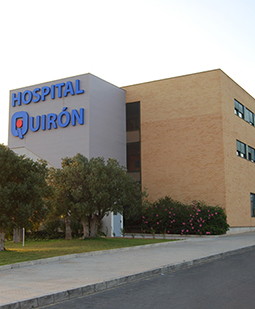
With more than 36 medical specialties, 200 physicians and surgeons of the highest level, Quironsalud Hospital Malaga is one of the most pertinent hospitals in Spain.
A neurosurgery center within Quiron Hospital Barcelona, specializing in minimally invasive surgeries on the spine. The Barcelona Spine Centre team of three neurosurgeons have over 15 years of experience in the field of neurosurgery.
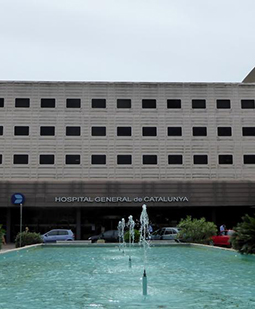
Hospital General de Catalunya provides medical services in over 25 specialties, being one of the most technologically advanced hospitals in Europe, with an excellent medical care capacity to carry out complex surgeries and medical conditions.
Quironsalud Hospital Torrevieja is an ISO-certified private hospital located in the north of Torrevieja, championing excellence in cancer treatment and management. IMTJ Best International Hospital of the world (awards 2017)
Hospital Ruber Internacional by Quirónsalud is designed as a "whole hospital". Thus, achieving maximum efficiency in the organization and development of the various medical, welfare, educational and research activities
An ISO certified modern private hospital, which was opened in 2006, and is part of the Quironsalud Hospital Group. This tertiary care hospital has certified medical specialties capable of treating the most complicated medical cases.
This international hospital incorporates prestigious doctors, invests in research and development, technology and continuing education that enhances skills, in facilities, and in an increased operational efficiency in order to provide nothing but the best
HM Hospitales is a hospital group with six private hospitals in Madrid: three general hospitals, a cardiovascular hospital, an oncological center and a women's health hospital.
The Department of Neurosurgery at the University Hospital HM Montepríncipe offers a wide spectrum of services, ranging from the simplest to the most complex neurosurgical techniques in the treatment of tumors.
What are the different methods of Hydrocephalus treatment?
Medication:
Medication is used in hydrocephalus to delay surgical treatment. It may be attempted among premature infant patients who suffer from post hemorrhagic hydrocephalus. However, medical treatment is not successful in the long term cure of hydrocephalus as it may result in metabolic changes. Medication reduces the secretion of cerebrospinal fluid and increases the re-absorption of cerebrospinal fluid.
About Hydrocephalus Treatment
Key facts to plan your treatment: how long it takes, your hospital stay, anaesthesia, risks and recovery.
Shunt Procedure
In this procedure, a ventricular catheter is placed in the cerebral ventricles. This allows the bypass and drainage of the excess fluid to other cavities in the body. The fluid may be drained into cavities such as the peritoneal cavity, the right atrium, pleural cavity and gallbladder. A shunt is a tube that is soft and flexible, and is usually made up of plastic or silicone rubber. It contains a valve that allows drainage and a catheter that joins the drainage and deposit sites. A small sensor may be placed near the valve to check pressure levels if the intracranial pressure is high. A ventriculoperitoneal shunt is permanently placed with one end inserted in a ventricle of the brain and another end in the peritoneal cavity. Other drainage sites may be the gall bladder, the heart’s right ventricle and the pleural area surrounding the lungs. According to the location of obstruction, fluid drainage may be done from the subarachnoid space around the brain. The shunt is usually replaced after 10 years in adults. In children, the shunts may need to be replaced sooner.
How to prepare for a Shunt proecdure?
Hydrocephalus should be diagnosed correctly by a CT scan or MRI.
Cerebrospinal fluid should be tested if any infection or tumor is suspected.
Patients with mental disabilities should go through neuropsychological examination.
The patient should inform the doctor about any medical conditions and illnesses.
Some medication that the patient is taking may be stopped.
Duration of surgery/treatment
Approximately one and a half hours
Days admitted
3 to 4 days
Anesthesia
General anesthesia
Recovery
- The patient is required to lie flat for 24 hours if the shunt is placed for the first time. - The patient’s neurological status and vital signs are monitored - Pain medication may be prescribed by the doctor. - The shunt is checked to ensure it is functioning normally.
Risks
The risks involved in ventricular shunt procedure include the following: - Problems in the abdomen such as collection of excess fluid - Blockage in the shunt - Clotting - Loss of memory and sensations - Seizures - Paralyses - Headaches - Speech problems - Valve failure - Bleeding - Reaction to anesthesia
After care
- The surgery area should be kept clean to avoid infections. - The cerebrospinal fluids should be checked by the doctor periodically to ensure that there is no infection and bleeding. - The pressure of the cerebrospinal fluid should be checked. - The patient’s eyes should be checked regularly for any symptoms of optic nerve damage that a shunt failure may cause.
The doctor should be contacted immediately if the following symptoms occur: - Fever - Breathing difficulty - Eating problems - Seizures - Stiff neck - Severe headaches - Severe drowsiness - Vomiting - No pulse
Spinal Tap
Spinal tap is also referred to as lumbar puncture. In this procedure a thin needle is inserted between the bones in the lower spine region to remove the cerebrospinal fluid. Once the fluid is collected, the needle is removed and the area is bandaged. The collected fluid may be sent for lab testing.
How to Prepare for Spinal Tap
The patient may need to give some blood tests.
The patient should inform the doctor about any medical conditions and illnesses and medication that the patient may be taking.
Some medication that the patient is taking may be stopped
Duration of surgery/treatment
Approximately 30 minutes.
Days admitted
None. Spinal tap is performed as an outpatient procedure.
Anesthesia
Spinal anesthesia.
Recovery
- The patient is required to lie flat on the back for some while to reduce the chances of headaches. - The puncture area may be painful for 1 to 2 days.
Risks
The risks associated with spinal tap are minimal. They include the following: - Infection - Bleeding - Headache - Herniation - Epidermoid cyst
After care
- The puncture site should be monitored for any sign of infection. The doctor should be contacted if the following symptoms occur: - Infection symptoms that include swelling, redness, pus formation and tenderness. - Headache
Third Ventriculostomy
This procedure is used only on patients with hydrocephalus induced by a blockage of the cerebrospinal fluid. It makes a bypass for the cerebrospinal fluid in the brain, and a shunt is not required. In this procedure, an endoscope is passed through the top of the skull into the brain. The endoscope enters the third ventricle through the lateral ventricle. A hole is made in its floor using a laser and excess fluid is drained into the subarachnoid space through the hole.
How to Prepare for Third Ventriculostomy
The patient may need to give some blood tests.
The patient should inform the doctor about any medical conditions and illnesses and medication that the patient may be taking.
Some medication that the patient is taking may be stopped.
Days admitted
2 to 3 days
Anesthesia
General anesthesia
Recovery
- The patient is taken to the Post-anesthesia Care Unit (PACU). - Once the patient starts to eat, drink and move around normally after some days, the patient will be discharged. - Before a follow-up appointment with the doctor, the patient is required to do a cine MRI. This is done to confirm the opening that is made in the base of the third ventricle, and to determine if the hydrocephalus treatment is effective.
Risks
The risks associated with third ventriculostomy are very rare. They include the following: - Over drainage - Injury to the basal artery - Hemorrhage
After care
The doctor should be contacted if the following symptoms occur: - Fever - Severe headache - Excess vomiting - Severe drowsiness - Infection at the incision area
Ready to compare hydrocephalus treatment hospitals in Spain?
Choose a hospital and send your enquiry to its international patient team. Each replies with its own price and plan.

 Private Hospital
 JCIPrice on request

 ISO