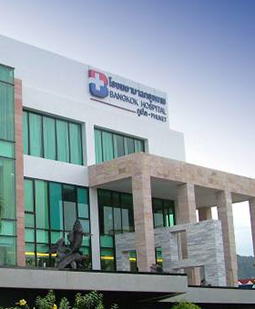
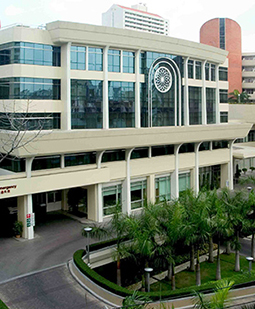
A multi-specialty tertiary hospital located in Phuket. The hospital provides medical services to Thai locals as well as international patients. Aside from medical procedures, it also offers dental services through its Dental Center.
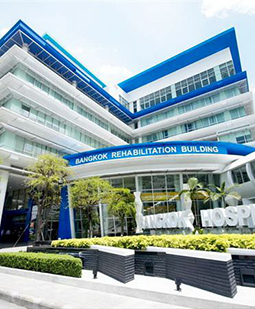
This private hospital is a part of a medical campus which offers a full range of medical services to local and foreign patients. Being a part of Thailand’s largest hospital group, it has over 650 physicians and 700 nurses.
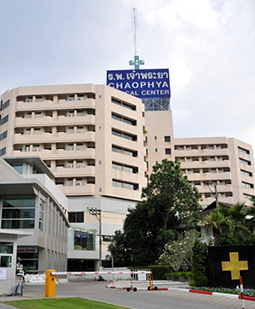
The Chaophya Hospital is a JCI accredited, tertiary private hospital in Bangkok, Thailand, which has been in operation since 1991. It has an international department which offers a comprehensive range of supporting services to foreign patients.
A JCI accredited hospital with a 225 in-patient bed capacity which offers a wide range of medical services. Services for international patients include aesthetic procedures and cosmetic surgery.
Vejthani is a 500 bed private hospital that serves international patients from over 40 countries annually. The hospital has all necessary services to accomodate medical tourists.
Being established in 1993, this tertiary private medical institution offers a wide range of medical care services. It has 350 in-patient bed capacity and is accredited by the Hospital Accreditation of Thailand.
Samitivej Sukhumvit Hospital is the main hospital of the Samitivej hospitals group. It provides quality tertiary care, from cosmetic surgery to major operations such as open heart surgery.
PricesArthroscopic Surgery upon requestArthroscopy - Shoulder upon requestArthroscopy - Knee upon request
What is Arthroscopic Surgery?
Arthroscopic surgery is a surgical procedure in which an arthroscope and other surgical instruments are inserted through tiny incisions in the skin to examine and treat the interior formation of a joint for various problems.
The arthroscope is an endoscopic device with a camera attached to it, which enables the orthopedic surgeon to view the internal structures. The arthroscope is of various sizes and a joint is examined with an arthroscope that is suited to its size.
The different types of arthroscopic surgeries are:
A small incision is made on the side of the joint that needs to be treated through which the arthroscope is inserted.
Other tiny incisions are made through which surgical instruments are inserted.
These instruments are used to cut, remove and stitch injured tissues.
After the surgery is completed, the arthroscope is withdrawn and the incision is closed with sutures.
A dressing is used to cover the incision area and a brace may be used to wrap around the joint.
How to Prepare for Arthroscopic Surgery?
The patient is physically examined before the surgery.
The patient is required to do some blood and urine tests.
The doctor should be informed about any medication that the patient may be taking.
Certain medication that the patient has been taking may be stopped two weeks before the surgery.
The doctor should be informed about any medical conditions or ailments of the patient.
The doctor should be informed if the patient has been drinking more than one or two drinks of alcohol in a day.
The patient should stop smoking some weeks prior to the surgery to recover quickly.
About Arthroscopic Surgery
Key facts to plan your treatment: how long it takes, your hospital stay, anaesthesia, risks and recovery.
Days admitted
Arthroscopic surgery is usually done as an outpatient procedure.
Anesthesia
The type of anesthesia is chosen depending on the joint that is being treated and the health of the patient.
Recovery
- The patient is taken to a recovery room until the patient comes out of the effects of anesthesia.
- Pain medication may be given to the patient.
- The surgical incisions are small and heal quickly.
- The patient is required to rest for several days after the surgery and keep the joint elevated.
- Ice packs may be applied to minimize swelling and pain.
- The patient is required to undergo an exercise program that helps in strengthening the patient’s muscles. This also prevents contracture of the surrounding tissues.
Risks
The risks that may occur in arthroscopic surgery are rare. They include the following:
- Infection
- Severe bleeding
- Swelling
- Blood clotting
- Injury to nerve and blood vessels
- Breakage of surgical instruments during the surgery
After care
- The incision area should be kept clean and dry.
- The surgeon or nurse will remove the surgical bandages.
- The doctor’s instructions should be followed carefully.
- The patient may be required to undergo physical therapy.
Any signs of infection should be reported to the doctor. These include:
- Severe joint pain
- Swelling
- Redness
- Bleeding
- Warmth
Ready to compare arthroscopic surgery hospitals in Thailand?
Choose a hospital and send your enquiry to its international patient team. Each replies with its own price and plan.
 Private Hospital
 JCI
 Thai HA
 Private Hospital
 Private Hospital
 Private Hospital
 Private Hospital
 Private Hospital
 Private Hospital
 Private Hospital
 ISO