Key planning information for pacemaker in Thailand.
$5,000 fromLowest listed price
3 hrsProcedure time
5 hospitalsList pacemaker
Pacemaker in Bangkok is listed from US$5,000 to US$12,500 at 5 hospitals. The operation takes 3 hours. Each hospital quotes its own price for your case.
Prices last updated Nov 2026
Cost of Pacemaker in Thailand
Table of prices by type of procedure, in US$. Each hospital quotes its own price for your case.
Vejthani is a 500 bed private hospital that serves international patients from over 40 countries annually. The hospital has all necessary services to accomodate medical tourists.
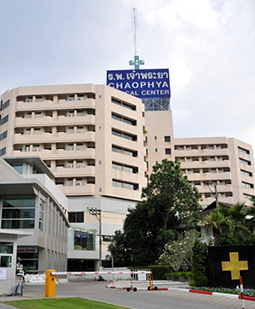
The Chaophya Hospital is a JCI accredited, tertiary private hospital in Bangkok, Thailand, which has been in operation since 1991. It has an international department which offers a comprehensive range of supporting services to foreign patients.
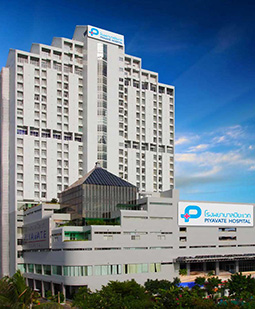
Piyavate Hospital is a 300 bed tetriary care hospital with an International coordinator team to take care of all the international patient's needs. It has been in operation since 1993.
What is a Pacemaker Implant?
A pacemaker implant is a procedure to insert a small, battery-operated device called a pacemaker into your chest. This assists your heart to beat regularly.
What are the different types of Pacemaker Implant treatments?
Endocardial approach.
This is the traditional procedure commonly used. An incision is made in the chest for the leads and pacemaker to be inserted. The lead(s) is carefully placed into the incision and into a vein, then guided to the heart. The tip of the lead is attached to the heart muscle, whilst the other end is inserted into a pocket created under the skin in the upper chest.
Epicardial approach.
This procedure is more commonly used with children. The surgeon attaches the tip of the lead to the heart muscle, whilst the other end is placed in a pocket created underneath the skin in the abdomen.
How Long Will My Pacemaker Last
Pacemakers can usually last between four to eight years. Your pacemaker will need to be replaced, once the the battery becomes low.
About Pacemaker
Key facts to plan your treatment: how long it takes, your hospital stay, anaesthesia, risks and recovery.
Duration of surgery/treatment
Normally, surgery can take up to 3 hours.
Days admitted
Generally, you will be allowed to go home after one or two days.
Anesthesia
Local Anesthesia
Recovery
Try to ensure that your wound is kept clean and dry. After around five days, you may take a shower.
Avoid lifting heavy objects and activities that require pushing or pulling heavy objects. For six weeks after the procedure, stay clear of vigorous activity such as golfing, tennis, and swimming. Try to walk as much as possible for exercise.
Normally, you can resume work within a week after you go home.
Risks
Risks related to a pacemaker implant could include:
- Infection.
- There is a minor risk that one of the leads may get dislodged. That is the reason you are advised to avoid strenuous exercise for a few weeks after the procedure.
- Internal bleeding
- Hemorrhage
After care
A check of your pacemaker should be done six weeks after your pacemaker is implanted. This follow-up appointment is important, due to the fact that adjustments will be executed that will extend the life of your pacemaker.
After that, your pacemaker should be checked every three months on the telephone to assess battery function.
A complete examination will be required once a year at a hospital or doctor's office.
Be aware that the following items could interfere with the functioning of your pacemaker:
- A cell phone. This should be used on the side that is opposite to where the pacemaker was implanted.
- Strong electric or magnetic fields, such as: some industrial equipment; high intensity radio waves ; and arc resistance welders.
Avoid any tests that require magnetic resonance imaging (MRI).
Ready to compare pacemaker hospitals in Bangkok?
Choose a hospital and send your enquiry to its international patient team. Each replies with its own price and plan.

 Private Hospital
 JCI
 ISO
 Thai HA